
Every business wants more customers from Google. The real question is how to get them without wasting time or money. Should you invest in SEO to build organic traffic, or should you pay for ads to bring people to your website sooner?
The answer depends on your goals, budget, competition, and how quickly you need results.
Search engine optimization (SEO) helps your website appear in unpaid search results. Pay per click advertising (PPC) puts your business in front of potential customers through paid ads. Both can attract people who are already looking for products or services like yours, but they work in different ways.
SEO is often a stronger choice for businesses that want lasting organic traffic and brand trust. PPC can be a better starting point when you need leads, sales, or quick feedback on a new offer. For many growing businesses, using both creates a more balanced search marketing plan.
Let’s compare SEO vs PPC, look at their costs and benefits, and find out which approach makes sense for your business.
What Is SEO?
Search engine optimization, or SEO, is the process of improving your website so that it can appear higher in unpaid search results. The goal is to connect your business with people searching for answers, products, or services that you offer.
Think about someone searching for “best email marketing software for small businesses.” If you sell email marketing software, a useful article or product page could help that person discover your company without you paying for each click.
SEO involves several areas of work, including keyword research, helpful content, technical improvements, internal linking, and earning relevant links from other websites.
How SEO Works
SEO starts with understanding what your audience searches for and why they search for it. A person looking for what is PPC advertising needs an explanation. Someone searching for PPC agency for small businesses may be ready to hire a service provider.
Your website needs pages that match these different needs.
Search engines also need to access, crawl, and understand your pages. Clear navigation, descriptive page titles, useful headings, mobile friendly layouts, and sound technical settings help search engines make sense of your website.
Content quality matters, too. A page should answer the reader’s question, explain the subject clearly, and offer something useful beyond a collection of keywords.
SEO takes ongoing work. You may need to update old pages, improve site speed, fix technical problems, and add new content as customer needs change.
Main Benefits of SEO
One of the biggest benefits of SEO is that a page can continue attracting visitors after it earns strong search rankings. Unlike paid ads, organic traffic does not require you to pay for every visit.
SEO can also help your business build trust. When people find useful answers and clear information on your website, they have more reason to view your company as a reliable option.
Other benefits include:
- Long term traffic: Useful pages can attract visitors for months or years, although rankings and traffic can change.
- Lower cost per visit over time: A successful page may bring more traffic without a matching increase in spending on each visit.
- Brand awareness: Appearing for relevant searches introduces your business to people who may not know it yet.
- Support for different buying stages: Articles, service pages, comparison guides, and product pages can answer questions from early research to purchase.
- More control over your website content: You can create pages around the questions and needs that matter to your customers.
For example, a web design agency could publish guides on website costs, design mistakes, and site launch planning. Those pages may attract potential clients who later need professional design services.
Limitations of SEO
SEO is not a quick fix. A new website may need months of steady work before it gains meaningful organic traffic. Competitive industries can take longer, and some pages may never reach the first page of search results.
Results also depend on factors outside your control. Search algorithms change, competitors publish better content, and customer search habits shift over time.
SEO requires investment in content, technical work, strategy, and often specialist support. Even when you stop publishing new articles, existing pages still need occasional updates and maintenance.
There is no guarantee that a specific page will rank first or generate a certain number of leads. SEO works best when you treat it as an ongoing business investment rather than a quick way to get visitors.
What Is PPC Advertising?
Pay per click advertising is a form of online advertising in which an advertiser generally pays when someone clicks an ad. Google Ads is a common platform for running paid search campaigns.
Unlike SEO, which works to earn organic rankings, PPC allows businesses to compete for paid placements in search results. These ads can appear near the top of the page when people search for relevant products or services.
Imagine you run a plumbing company and want more emergency service calls. You could create a paid search campaign targeting people searching for an emergency plumber in your service area. When the campaign is live and eligible to show, your ad may appear for those searches.
You set campaign budgets, select keywords, write ads, and direct visitors to relevant landing pages. You can then measure whether those visitors call, fill out a form, book an appointment, or make a purchase.
How PPC Works
A PPC campaign begins with a clear goal. You might want more phone calls, online sales, demo requests, or enquiries from potential customers.
Next, you select search terms related to your offer. You create ads that match those searches and send visitors to pages that help them take the next step.
Google Ads uses an auction to decide which ads can appear and where they appear. The outcome depends on factors such as the bid, ad quality, search context, and other auction signals.
Once your campaign starts running, you can review its performance and make changes. If a keyword attracts clicks but few qualified leads, you can adjust the targeting, improve the landing page, or pause the keyword.
This feedback makes PPC useful for testing new offers and learning which messages appeal to potential customers.
Main Benefits of PPC
PPC is useful when your business needs visibility without waiting for organic rankings to grow.
Its main benefits include:
- Quick visibility: Eligible ads can begin appearing soon after campaign approval and launch.
- Targeted reach: You can set locations, schedules, devices, and other targeting options where available.
- Budget control: Campaign settings let you manage spending, although actual costs and results can vary.
- Fast testing: You can test different headlines, offers, keywords, and landing pages.
- Clear conversion tracking: Proper tracking can connect ad clicks with leads, purchases, calls, and other business outcomes.
- Support for seasonal offers: Paid campaigns can focus on a limited time promotion or a product launch.
Suppose you launch a new service and want to learn whether people will pay for it. A small, carefully tracked PPC campaign can help you test demand before investing heavily in a large content plan.
Limitations of PPC
The biggest drawback of PPC is its ongoing cost. You pay for clicks, and those clicks do not always turn into customers.
A campaign may attract visitors who are curious but not ready to buy. If your keywords are too broad, your ads are poorly written, or your landing page does not match the promise in your ad, you can spend money without generating enough sales or leads.
Competition can also raise click costs. In industries where several businesses target the same high value searches, gaining profitable traffic may require better targeting, stronger landing pages, and careful budget management.
Paid visibility also depends on continued campaign funding. When your ads stop running, the traffic they generate usually stops as well.
PPC is not simply a matter of setting a budget and waiting for sales. It needs regular monitoring, accurate tracking, and changes based on real performance.
SEO vs PPC: Key Differences
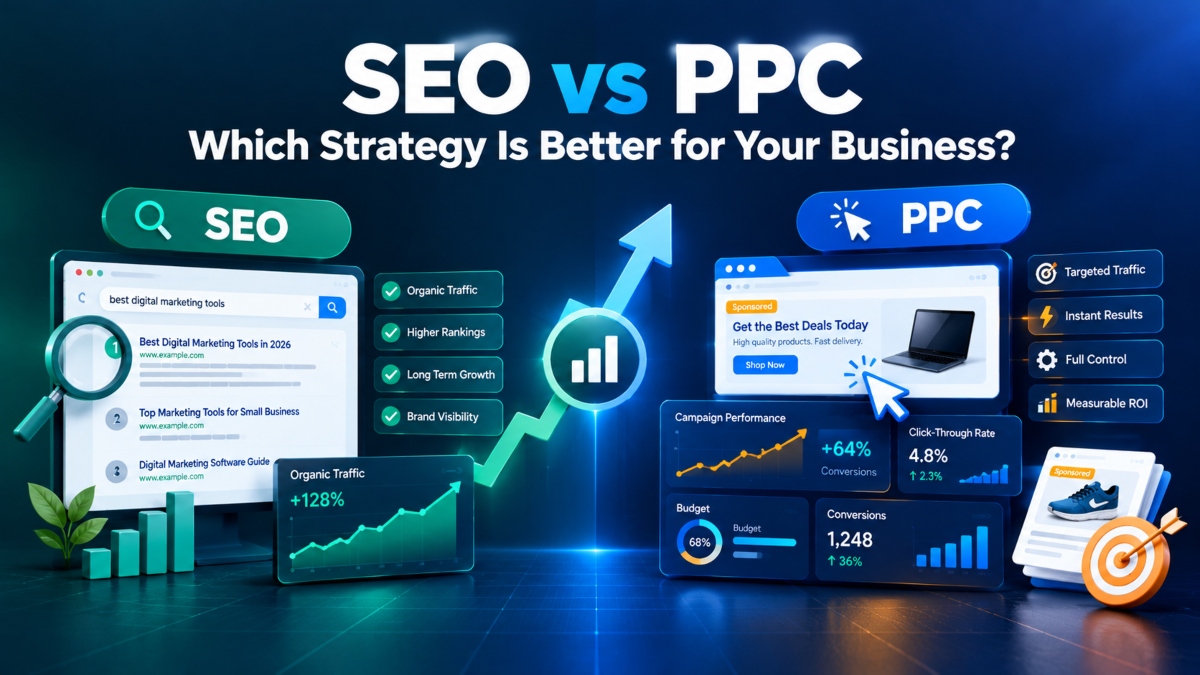
SEO and PPC both help businesses attract visitors from search engines, but they differ in cost, timing, control, and long term value. Understanding these differences can help you decide where your marketing budget will work hardest.
| Factor | SEO | PPC |
|---|---|---|
| Traffic source | Unpaid organic search | Paid advertising |
| Time to results | Usually takes months to build traction | Can bring traffic soon after launch |
| Cost model | Content, technical work, and specialist fees | Ad spend plus campaign management |
| Traffic duration | Can continue after rankings are earned | Usually stops when ads stop |
| Targeting | Based on content and search intent | Offers more direct control over campaign targeting |
| Testing | Organic feedback often takes longer | Offers quicker feedback on ads and offers |
| Best use | Long term traffic and brand trust | Quick visibility, leads, and sales campaigns |
SEO vs PPC Cost
The cost of SEO depends on your website, competition, content needs, and the level of technical work required. A small business might begin with a few important service pages and useful articles. A larger company competing in a crowded market may need a broader content plan and ongoing technical support.
PPC has a more direct cost structure. You pay for ad clicks, while campaign management, landing page design, and conversion tracking can add to the total.
However, comparing only the initial costs can lead to the wrong decision. An SEO article may continue attracting qualified visitors long after publication. A PPC campaign may generate leads quickly, but those leads can become expensive if the cost of each new customer is too high.
For a fair comparison, measure the total cost of each channel against the leads, sales, and revenue it produces over a suitable period.
SEO vs PPC ROI
Return on investment (ROI) measures the financial return from your marketing compared with its cost. Neither SEO nor PPC guarantees a better return in every situation.
For SEO, you need to account for content creation, technical work, tools, and staff time. For PPC, include advertising costs, campaign management, and landing page expenses.
Track qualified leads, customer acquisition cost, conversion rates, and revenue. An SEO page that brings 1,000 visitors but no customers may be less valuable than a PPC campaign that brings 100 visitors and generates ten sales.
The goal is not simply to attract more traffic. It is to attract the right people and turn their interest into business results.
When Is SEO Better for Your Business?
SEO is a strong option when your business can invest time and resources in building organic visibility. It works particularly well when customers search for answers, compare different providers, or spend weeks researching a purchase.
If your company has useful knowledge to share and people regularly search for your services, organic search can become a reliable source of potential customers.
Businesses That Benefit Most From SEO
Several types of businesses can gain value from a steady SEO plan.
SaaS companies: Software buyers often compare features, pricing, integrations, and alternatives before making a decision. Helpful guides and comparison pages can attract potential buyers throughout that process.
Professional service providers: Consultants, accountants, lawyers, and marketing agencies can use service pages and educational content to answer customer questions and build trust.
E commerce stores: Product pages, category pages, buying guides, and useful product information can attract people searching for specific items.
Local businesses: Restaurants, repair services, clinics, and other local providers can improve their chances of appearing in relevant local searches through accurate business information and useful location pages.
Publishers and content websites: Sites that answer common questions can attract recurring organic visits when their pages meet user needs and remain relevant.
Signs You Should Invest More in SEO
SEO deserves more attention when your audience searches for your products or services regularly, your website has gaps in useful content, and you can wait for results to develop.
It may also be the right choice if paid clicks are expensive and your business needs a stronger source of traffic that does not depend entirely on advertising spend.
Before committing to a large campaign, review the search terms your audience uses, the pages already bringing visitors, and the level of competition. This helps you find realistic opportunities instead of publishing content without a clear purpose.
When Is PPC Better for Your Business?
PPC is often the better starting point when speed matters. If you need enquiries this week, want to promote a limited time offer, or have a new product to test, paid search can put your business in front of relevant users sooner than SEO usually can.
It also gives you a way to test whether a keyword, offer, or landing page attracts customers before investing more resources in it.
Businesses That Benefit Most From PPC
New businesses: A company with a new website may need enquiries while its organic presence is still growing. Targeted paid campaigns can help fill that gap.
E commerce brands: Paid search can support product launches, seasonal promotions, and campaigns for products with strong buying intent.
Service businesses: Plumbers, electricians, repair firms, and other providers may use local paid campaigns to reach people looking for help now.
Event organizers: Conferences, workshops, and ticketed events can use PPC to attract registrations during a short promotion period.
Startups testing new offers: A startup can test different messages and landing pages to learn which offer attracts the strongest response.
Signs You Should Invest More in PPC
PPC may deserve a larger share of your budget when you have a clear sales target, a useful offer, and a way to measure conversions.
It can also help when organic competition is high and your business needs additional visibility for valuable commercial searches.
However, do not increase spending just because a campaign generates clicks. Review the quality of the leads, the cost of acquiring each customer, and the revenue those customers bring in. If the numbers do not work, improve the campaign before adding more money.
SEO vs PPC for Different Business Types
There is no single channel mix that works for every business. Your sales cycle, customer needs, competition, and budget should guide your decision.
SEO vs PPC for Small Businesses
A small business often benefits from combining local SEO with carefully targeted paid search.
For example, a local cleaning company can improve its service pages and business profile while running ads for searches related to urgent cleaning appointments. SEO supports long term discovery, while PPC can help generate enquiries sooner.
If the budget is tight, start with the services and locations most likely to bring profitable work. You do not need to target every possible keyword from day one.
SEO vs PPC for SaaS Companies
SaaS businesses often have a longer sales cycle because buyers compare software, request demos, and involve several people in a purchase decision.
SEO can support this journey through educational articles, feature pages, pricing information, and product comparisons. PPC can focus on high intent searches, such as people looking for a specific software category or comparing alternatives.
For a SaaS company, the best results often come from tracking demo requests, trial registrations, qualified opportunities, and paid subscriptions rather than measuring clicks alone.
SEO vs PPC for E commerce
E commerce businesses can use SEO to attract shoppers through product pages, category pages, buying guides, and product comparisons.
PPC can support seasonal sales, new product launches, and searches from people who are ready to buy. It can also help a store test which product messages attract more orders.
The right balance depends on profit margins, inventory, customer demand, and the cost of acquiring a sale. A product that sells well through ads may not remain profitable if click costs rise or margins shrink.
SEO vs PPC for Professional Services
Professional service firms often need to build trust before a customer makes contact. SEO can help through useful service pages, answers to common questions, case studies, and clear information about the company’s experience.
PPC can reach people who are actively looking for a provider, particularly when a service solves an urgent problem.
A law firm, for example, might use educational content to answer common legal questions while running targeted campaigns for specific services. Both channels should send visitors to pages that explain the service clearly and make the next step easy.
Can SEO and PPC Work Together?
Yes. SEO and PPC can support each other when each channel has a clear purpose. Paid campaigns can bring traffic and test demand sooner, while SEO can build organic visibility around the search terms that matter to your business.
Rather than treating them as competing options, think about how they can support different stages of the customer journey.
Use PPC Data to Find Valuable SEO Keywords
PPC campaigns can show which search terms attract clicks, qualified leads, and sales. That information can help you decide which topics deserve attention in your SEO plan.
For example, suppose a marketing agency runs ads for several services and finds that searches related to technical SEO produce the most qualified enquiries. The agency can use that information to improve its technical SEO service page and create useful articles around common customer questions.
Paid campaign data does not guarantee that a keyword will perform just as well in organic search. Still, it gives you a useful starting point for deciding where to invest in content.
Improve Landing Pages With Shared Data
Both channels depend on pages that meet visitor expectations.
If people click an ad or organic result and leave without taking action, the page may not answer their question, explain the offer clearly, or make the next step easy.
Review search terms, visitor behaviour, form completion rates, and sales data. Then improve the page headline, service details, calls to action, page speed, and supporting information where needed.
A better landing page can help paid campaigns convert more visitors and make organic visitors more likely to contact your business.
Balance Paid Campaigns With Organic Growth
A practical combined plan gives each channel a different job.
Use PPC for urgent opportunities, commercial searches, and testing new offers. Use SEO to build useful service pages, educational content, and organic visibility over time.
As organic pages begin attracting qualified visitors, review whether some paid campaigns still justify their cost. You may decide to keep ads for high value searches while reducing spend on terms where organic traffic already performs well.
Do not cut paid campaigns simply because rankings improve. Test the financial results first, since paid and organic visitors may behave differently.
How to Choose Between SEO and PPC
Choosing between SEO and PPC becomes easier when you start with your business goals rather than the channels themselves.
Ask yourself three questions:
- How soon do I need leads or sales?
- How much can I spend, and for how long?
- What action should visitors take when they reach my website?
Choose PPC for Immediate Demand
If your business needs enquiries soon, a targeted PPC campaign may be the better starting point. Set a clear budget, choose relevant search terms, create a suitable landing page, and track conversions from the beginning.
Start with a manageable campaign and use the results to decide whether more spending makes sense.
Choose SEO for Long Term Organic Growth
If you can invest consistently and wait for results, SEO can help build a lasting source of relevant traffic.
Begin with your most valuable service or product pages. Improve their content, address technical problems, and publish useful articles that answer real customer questions.
Measure progress through organic visits, qualified leads, sales, and page performance rather than rankings alone.
Use Both When Your Budget Supports It
If your budget allows, a combined plan can cover immediate needs and future growth.
For instance, a business might use PPC to generate enquiries while improving its service pages and publishing content around its main search terms. Over time, performance data can help the business decide where each additional dollar is most useful.
The right mix may change as your website gains authority, customer demand shifts, or campaign costs rise.
How to Measure SEO and PPC Performance
Traffic is useful, but it does not tell the whole story. To judge SEO and PPC fairly, measure the actions that matter to your business.
SEO Metrics to Track
Monitor organic clicks, search impressions, relevant keyword positions, qualified leads, conversion rates, and organic revenue.
Look beyond the number of visitors. A page that attracts fewer people but generates more qualified enquiries may be more valuable than a page with high traffic and little business value.
PPC Metrics to Track
Monitor cost per click, click through rate, conversion rate, cost per lead, customer acquisition cost, and return on ad spend.
If your goal is lead generation, check how many leads become paying customers. If you sell products online, compare advertising costs with revenue and profit margins.
Use accurate conversion tracking wherever possible. This helps you understand which campaigns and pages contribute to business results instead of making decisions based on clicks alone.
Final Verdict: SEO or PPC?
So, which strategy is better for your business?
SEO is usually the stronger choice for building organic visibility, earning trust, and attracting traffic over time. PPC is often better when you need quicker visibility, immediate lead generation, or fast feedback on a new offer.
For many growing businesses, the best plan combines the two. PPC can help capture demand today and reveal which searches bring valuable customers. SEO can use those findings to build useful pages that attract organic traffic over time.
Start with your goals, available budget, and sales timeline. Track leads and revenue, review performance regularly, and adjust your spending based on the results.
The goal is not to choose a channel simply because it is popular. It is to build a search marketing plan that brings the right customers to your business at a cost you can support.
Frequently Asked Questions
Is SEO better than PPC?
SEO is often better for long term organic traffic and brand trust. PPC is useful when a business needs visibility, leads, or sales sooner. The right choice depends on your budget, competition, and business goals.
Is PPC more expensive than SEO?
PPC requires spending on advertising clicks, while SEO costs can include content, technical work, tools, and specialist fees. Either can become expensive in a competitive market. Compare total costs with the customers and revenue each channel generates.
How long does SEO take to show results?
SEO results vary by website age, competition, content quality, and technical health. Some pages may gain visibility within weeks, while others take months or longer. No agency can guarantee a specific ranking or timeline.
Can PPC improve SEO rankings?
PPC does not directly improve organic rankings. However, paid campaigns can help you test search terms, offers, and landing pages. You can use those findings to guide your organic content plan.
Should a small business use SEO or PPC?
A small business can use SEO to build organic visibility and PPC to generate enquiries sooner. If funds are limited, start with the service pages and paid keywords most likely to bring profitable customers.
Can I run SEO and PPC at the same time?
Yes. Many businesses run paid campaigns while building organic traffic. Shared conversion tracking can help you compare performance and decide how to distribute your marketing budget.
Which has a better ROI, SEO or PPC?
Neither channel always delivers a better return. SEO can bring recurring traffic after pages gain visibility, while PPC can produce leads quickly when campaigns are profitable. Compare total costs, qualified leads, customer acquisition costs, and revenue over time.
Read More: How SEO, Content, and Link Building Improve Rankings