
Publishing a great article feels good. You research the topic, write useful advice, polish every heading, and hit publish. Then a few days pass, and nothing much happens. Traffic stays low, other websites do not mention your work, and your page struggles to get noticed.
This is where backlinks can help.
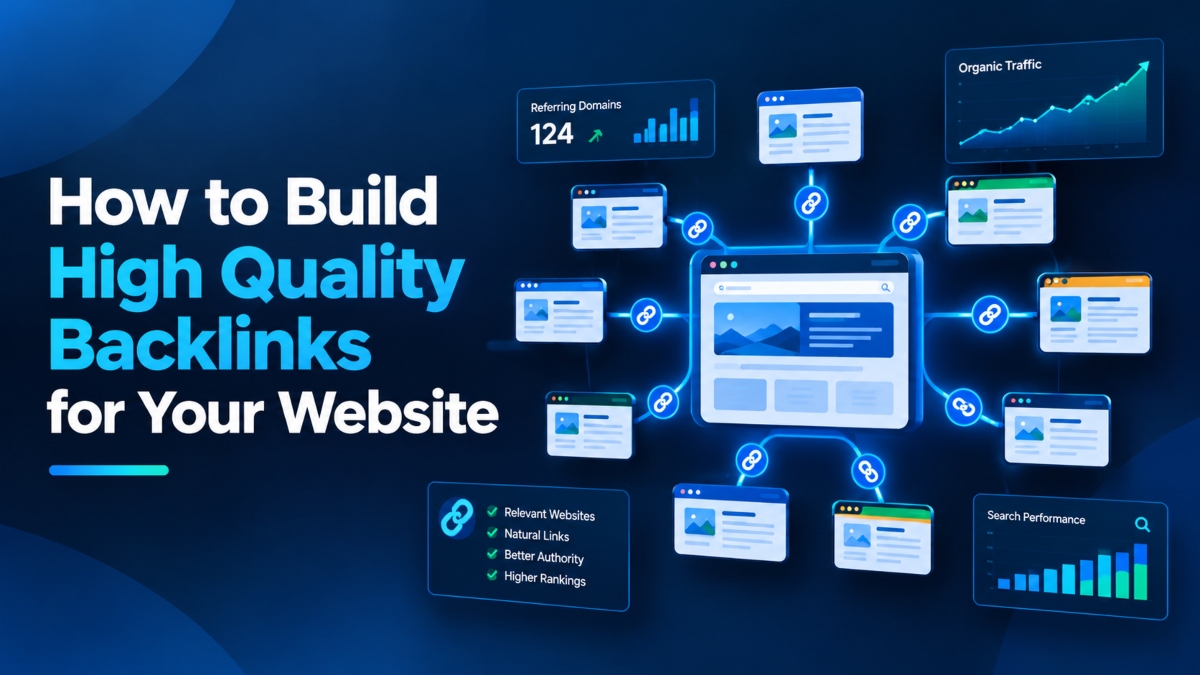
Backlinks are links from other websites that point to pages on your site. When relevant websites reference your content naturally, they can help readers discover your work, bring referral traffic, and give search engines more context about your pages.
But not all backlinks offer the same value. A single editorial link from a respected website in your niche can be more useful than dozens of links from unrelated directories or spam filled pages.
The good news is that you do not need a huge budget or a large SEO team to start building quality backlinks. You need useful content, a clear plan, and a good reason for other people to reference your website.
In this guide, you will learn how to build high quality backlinks through content creation, competitor analysis, digital PR, guest posting, broken link building, and targeted outreach. You will also learn how to assess link quality, avoid risky tactics, and track the results of your work.
What Makes a Backlink High Quality?
A high quality backlink comes from a relevant source, appears in a useful context, and gives readers a reason to visit the linked page. The best links usually form part of an editorial decision rather than a deal made only to influence search rankings.
Before you spend time contacting website owners, learn what separates a useful backlink from one that adds little value.
Relevance of the Linking Website
Relevance is one of the first things to check when assessing a backlink opportunity.
Imagine that you run a SaaS blog and publish a detailed guide to project management software. A link from a business technology publication that covers software reviews, productivity, and workplace tools makes sense. Its readers may find your guide useful.
Now imagine receiving a link from a website about an unrelated subject with no clear connection to your content. That link may bring little relevant traffic and offer limited context to search engines.
Look for websites that serve a similar audience or cover subjects related to your own. A close topical match gives the link a clear purpose.
Trust and Website Credibility
A website can have impressive traffic estimates or a high third party authority score without being a good backlink source.
Look beyond numbers. Check whether the site publishes original content, attracts genuine readers, covers its subject with care, and follows clear editorial standards. Review its recent articles and see whether the website appears to serve a real audience.
Tools such as Ahrefs, Semrush, and Moz can help you assess a site’s backlink profile and discover referring domains. Their authority scores are useful estimates, but they are not direct Google ranking factors.
The goal is to find credible websites that make sense for your business, not simply chase the highest score.
Editorial Placement and Link Context
Where a backlink appears matters to its usefulness.
A link placed naturally within an article, alongside information that supports the topic, gives readers a clear reason to click. A link dropped into an unrelated comment, a crowded footer, or a page full of promotional links offers much less context.
For example, a guide about email marketing might reference your free email subject line tester while explaining how marketers can improve their campaigns. The link supports the discussion and gives readers a useful next step.
That is a better reason to link than adding your URL to a page simply because the site owner agrees to accept it.
The Value of the Linked Page
Even a relevant publisher needs something worth referencing.
Your destination page might be an original report, a detailed tutorial, a free calculator, a useful template, or a product guide that answers a common question. The page should offer enough value that another writer can recommend it with confidence.
Also, make sure the page loads properly, works on mobile devices, answers its main question, and contains accurate information.
A backlink should lead somewhere useful. If the destination disappoints readers, the link loses much of its practical value.
Create Link Worthy Content Before Starting Outreach
One of the most common mistakes in link building is contacting dozens of websites before creating anything worth linking to.
Think about it from a publisher’s point of view. Their article already answers a question, so why should they add another link? You need to offer something that improves their content or gives their readers a reason to learn more.
Publish Original Research and Industry Surveys
Original data gives other websites a reason to cite your work.
Suppose you run a SaaS company and want to attract links from business publications. You could survey 300 small business owners about how they use AI tools, what tasks they automate, and which problems they still struggle to solve.
Turn the findings into a report with clear charts, useful statistics, and an explanation of how you collected the data. Make the results easy to understand and simple to reference.
Writers, consultants, and industry bloggers may use your findings when discussing AI adoption in small businesses. Each relevant citation creates an opportunity for a natural backlink.
You do not need a huge survey to start. A focused poll, a well documented customer study, or an analysis of publicly available data can also support a useful report. Be clear about your sample size, methods, and limits so readers can judge the findings for themselves.
Create Free Tools, Templates, and Detailed Guides
Useful resources can attract links long after publication.
Consider what your audience needs help with. A marketing team might need a campaign planning template. A small business owner might want a website launch checklist. An SEO beginner might benefit from a keyword mapping spreadsheet or a simple backlink audit template.
These resources solve specific problems and give other writers something concrete to recommend.
Detailed guides can work just as well when they answer a question better than existing pages. Explain the process, add examples, address common mistakes, and keep the information current.
The strongest resource is not always the longest one. It is the one that makes a task easier or helps the reader reach a clear answer.
Make Your Content Easy to Reference
A useful resource should also be easy to navigate.
Use descriptive headings, clear charts, short explanations, and links to relevant supporting material where appropriate. If you publish research, include the data source and methodology. If you create a free tool, explain how it works and who can benefit from it.
Give the page a clear title and a readable URL. Add a short summary of the main findings near the top so a writer can quickly understand why the resource matters.
Before launching an outreach campaign, ask yourself one simple question: would another website have a genuine reason to send its readers here?
If the answer is unclear, improve the resource before spending time on promotion.
Analyze Competitor Backlinks to Find New Opportunities
You do not have to come up with every backlink idea from scratch. Other websites in your niche can show you which types of content already attract links and which publishers cover your subject.
Competitor backlink analysis helps you find those opportunities and decide where your own content might fit.
Find Competitors Ranking for Your Target Keywords
Start by searching Google for the keywords you want to rank for. Review the pages that appear near the top and identify websites publishing content for the same audience.
Your SEO competitors are not always your direct business competitors. A software company, for example, might compete with marketing blogs, industry publications, and review websites for the same search terms.
Make a shortlist of relevant pages that cover topics related to your own content.
Review Referring Domains and Linking Pages
Use a backlink analysis tool to see which websites link to your competitors. Look at the actual linking pages rather than relying only on the number of backlinks reported.
Ask a few questions as you review each opportunity:
- Does the website cover a subject related to mine?
- Does the linking page provide useful information to its readers?
- Could my content offer something that the existing article lacks?
- Is there a clear reason for the publisher to reference my page?
Record promising websites in a spreadsheet, along with the page URL, contact details, reason for outreach, and campaign status.
A smaller list of relevant prospects is often more useful than a huge spreadsheet filled with unrelated websites.
Use the Skyscraper Technique With Care
The Skyscraper Technique involves finding content that already attracts backlinks, creating a more useful resource, and contacting websites that link to the original.
For example, you might find an older guide to SEO reporting that lacks recent examples or useful templates. You could publish an updated version with clear instructions, fresh screenshots, and a downloadable reporting sheet.
However, making a page longer does not automatically make it better. Your new resource should offer a real improvement, whether that means more accurate information, clearer instructions, better examples, or a tool that saves readers time.
When contacting publishers, explain what your resource adds and let them decide whether it belongs in their article.
Earn Backlinks Through Digital PR
Digital PR helps your business earn attention from journalists, industry writers, bloggers, and other publishers. Instead of asking people to link to an ordinary page, you give them a story, finding, or expert contribution worth sharing.
This method can take more planning than basic outreach, but a strong story can reach several relevant publications.
Pitch Original Data and Industry Trends
Writers often need fresh facts to support their articles. Your business can become a useful source by collecting original data or presenting an interesting finding.
You might publish an annual report on software adoption, analyze customer survey responses, or compare how businesses use different marketing tools.
Make your findings easy to check. Include the sample size, collection method, date, and limits of your data. Avoid making broad claims that the results cannot support.
A short report with clear findings can give a journalist more to work with than a long promotional announcement.
Offer Expert Commentary to Journalists
You do not always need a large report to earn media coverage. Sometimes, a clear expert response to a current industry story is enough to start a conversation.
If you work in cybersecurity, for example, you might explain what a new security threat means for small businesses. A marketing expert could comment on a change in search behavior or email performance.
Keep your response focused. Offer a useful explanation, support it with facts where possible, and avoid turning every answer into a sales pitch.
Write Pitches That Give Publishers a Reason to Respond
A good pitch respects the writer’s time.
Start with a clear subject line. Explain the story in the first few sentences, share the most useful evidence, and state why the topic fits the publisher’s audience. Include the relevant resource or data without sending a long list of promotional links.
Here is a simple example:
Subject: New survey data on AI adoption among small businesses
Hi [Name],
I saw your recent coverage of AI tools for small businesses. We recently surveyed 300 business owners about their use of AI and found several useful patterns in how they apply these tools to daily work.
Our report includes the findings, survey details, and charts that may support your coverage of this topic.
Would the data be useful for any upcoming articles?
Best regards,
[Your Name]
Personalize every pitch. A relevant message sent to the right person has a better chance of starting a useful conversation than a generic email sent to hundreds of addresses.
Reclaim Unlinked Brand Mentions
Sometimes, another website mentions your company, product, founder, or original research without linking to your website.
These mentions are worth checking because the writer has already chosen to reference your brand. A polite request may be enough to turn the mention into a useful link.
Find Relevant Mentions Across the Web
Search for your company name, product name, and common variations. You can also use search operators to find pages that mention your brand while excluding your own website.
For example, a search for your company name combined with a phrase such as “case study” or “review” may uncover articles worth checking.
Monitoring tools can help you find new mentions as they appear. Review each result manually to confirm that it refers to your business and does not already contain a link.
Request a Link With a Short, Polite Email
Contact the writer or site editor. Mention the exact article, thank them for the reference, and explain how a link would help readers find the full resource.
Here is a template you can adapt:
Subject: Link request for your article about [Topic]
Hi [Name],
I came across your article about [Topic] and noticed the mention of [Brand]. Thanks for including us.
Would you consider linking that mention to our [relevant page]? It would help readers find the full details.
Thanks for your time.
Best regards,
[Your Name]
Keep the request friendly and brief. The publisher is free to decline, and a link should only be added when it helps the reader.
Use Broken Link Building to Earn Relevant Links
Broken link building involves finding a dead link on a relevant website and offering a suitable replacement from your own site.
It works best when you can genuinely help the publisher repair a poor user experience. The replacement must match the subject and purpose of the missing resource.
Find Broken Links on Relevant Websites
Look for resource pages, industry guides, and articles in your niche that contain outbound links to pages that no longer work.
Backlink analysis tools and broken link checkers can help you find these opportunities. You can also review older resource lists and educational pages manually.
Do not assume every error means the page has disappeared permanently. Check the URL and confirm that the original destination is unavailable.
Create or Identify a Suitable Replacement
Next, find out what the dead page covered. If an archived copy is available, use it to understand the original subject and the type of information readers expected.
Check whether your website already has a page that meets the same need. If not, consider creating a useful replacement.
For example, if an industry resource page links to a missing guide about email campaign planning, a detailed guide on your site may serve as a suitable alternative.
Your page should match the original resource closely enough to help the same readers. A random page from your website is unlikely to be a good replacement.
Contact the Site Owner With a Helpful Suggestion
Send a brief email explaining where you found the broken link and which page it leads to. Then offer your resource as an option.
Avoid suggesting that the publisher must use your link. Your role is to point out the problem and provide a possible solution.
Some site owners will respond, while others will not. Keep track of your outreach and move on when a prospect does not reply.
Write Guest Posts for Relevant Websites
Guest posting can help you reach a new audience, build professional relationships, and earn relevant editorial links. The key is to write for the publication’s readers rather than treating the article as a vehicle for backlinks.
Choose Sites With a Relevant Audience
Look for websites that cover subjects related to your field and publish original, useful articles. Read several recent posts to understand their tone, depth, and editorial standards.
Check whether the site has a real audience and whether its articles offer value beyond links to other websites.
Be careful with publications that accept almost any topic, publish large amounts of thin content, or promise backlinks in exchange for payment without clear advertising terms.
Pitch an Original Article Idea
Before sending a pitch, review the site’s existing content. Find a question that has not been answered well or a subject that deserves a fresh angle.
For example, instead of pitching another general article about SEO basics, propose a practical guide to measuring the results of content updates for small SaaS teams.
Explain the proposed topic, why it suits the publication, and what readers will learn. A few clear sentences are usually enough to start the conversation.
Follow Editorial and Link Policies
Write original content, follow the publication’s guidelines, and include links only when they support the subject.
Avoid mass guest posting, repeated articles with minor changes, and websites built mainly to sell backlinks. Google may treat links created primarily to manipulate search rankings as link spam.
A good guest article should stand on its own. Even if the editor declines a backlink, the contribution should still be useful to the publication’s audience.
Get Listed in Relevant Directories and Best Of Guides
Directories and curated resource lists can help people discover your business. Some also provide relevant backlinks, especially when the listing comes from a trusted organization or a publication that serves your audience.
However, adding your website to every directory you can find is rarely a good use of time.
Choose Established Industry and Business Directories
Depending on your business, useful options may include professional associations, local business groups, established software directories, and respected industry listings.
Check the directory’s purpose, editorial standards, audience, and existing listings before submitting your website.
Complete your profile with accurate business details and a clear description of what you offer. Do not add keywords unnaturally or submit misleading information to gain visibility.
Find Curated Lists That Match Your Website
Search for articles that list useful tools, recommended service providers, or resources in your industry.
If you run a SaaS company, you might find a relevant guide comparing project management tools or email marketing platforms. Review its selection criteria and check whether your product fits.
When reaching out to the editor, explain what makes your resource useful and provide supporting details. Do not assume that a listing is deserved simply because a competitor appears on the page.
The purpose is to reach the right audience and earn a relevant reference, not to collect directory links for their own sake.
Build Relationships That Lead to Natural Backlinks
Link building becomes easier to manage when you stop viewing every conversation as a request for a backlink.
Writers, editors, podcast hosts, and industry experts often need reliable information, useful examples, and knowledgeable sources. If you can help them, they may return to your work when a relevant opportunity comes up.
Connect With Industry Writers and Experts
Follow publications and creators who cover your field. Read their work, ask thoughtful questions, and contribute useful information when you have something relevant to share.
You might interview an expert for your blog, invite a specialist to comment on an industry report, or offer your own experience for a podcast discussion.
These activities can lead to genuine professional connections. They may also create opportunities for editorial mentions, interviews, and links over time.
Share Useful Resources Without Spamming
Online communities can help you understand the questions your audience asks most often. Participate in relevant discussions and answer questions when you can provide a useful response.
Share your own content only when it directly helps with the question being discussed and the community allows it.
If every contribution contains a promotional link, people have little reason to trust your participation. Give useful answers first and let your resources support the discussion when they fit.
Avoid Risky Backlink Building Tactics
Not every backlink opportunity is worth pursuing. Some tactics may create short term gains while exposing your website to search spam problems.
Google’s spam policies identify links created mainly to manipulate rankings as a violation. Understanding these rules helps you choose safer ways to earn links.
Avoid Paid Links Intended to Manipulate Rankings
Buying links for the purpose of influencing organic search rankings can violate Google’s spam policies. The same concern applies to selling links that pass ranking credit without the proper treatment.
Paid advertising and sponsorships are different when handled correctly. Paid links should use the appropriate rel="sponsored" attribute. A rel="nofollow" attribute may also be suitable in certain cases.
If you pay for a sponsored article, treat it as advertising or brand exposure rather than a way to purchase ranking credit.
Stay Away From Link Farms and Automated Link Schemes
Avoid networks of sites created mainly to exchange backlinks, automated comment links, bulk submissions to unrelated directories, and guest post operations that publish thin articles solely to place links.
These approaches focus on producing links rather than helping readers. They can also create a backlink profile that looks unnatural.
A better approach is to earn links through useful resources, relevant contributions, and genuine editorial interest.
Be Careful With Excessive Link Exchanges
A natural link exchange between two relevant websites is not automatically a problem. For example, two companies might reference each other’s resources because both are useful to their readers.
The risk increases when link swaps become excessive, organized, or intended mainly to manipulate search rankings.
Do not make backlink exchanges the foundation of your strategy. Let links follow genuine editorial reasons rather than agreements designed around ranking gains.
Review Suspicious Backlinks Before Taking Action
Your website may receive links from low quality or unrelated sites without your involvement. Their presence alone does not mean that your site has violated Google’s policies.
Review the source, linking page, and context before deciding what to do. Look for evidence of deliberate link manipulation rather than assuming that every unfamiliar domain is dangerous.
Google’s disavow tool is intended for specific situations involving a substantial number of spammy or artificial links and a related risk of manual action. It is not a routine tool for removing every link you dislike.
When in doubt, review the available evidence before taking action.
Track Backlink Quality and SEO Results
Building links is only part of the process. You also need to know which activities attract relevant links, which pages earn attention, and whether the work supports your business goals.
A simple tracking system can help you improve future campaigns without getting caught up in numbers that tell only part of the story.
Monitor New and Lost Referring Domains
A referring domain is a website that links to your site. Tracking new referring domains helps you see which campaigns attract links and which resources gain attention.
Use a backlink analysis tool to review newly discovered links and identify links that have disappeared. Check the actual linking pages when possible because tool reports may not always reflect the full picture immediately.
Record the date, linking domain, destination page, and campaign that produced the link.
Review Link Relevance, Context, and Anchor Text
Look at the subject of each linking page, the context around the link, and the destination it points to.
Anchor text is the visible text people click. Natural anchor text may include a brand name, a page title, a descriptive phrase, or a URL.
Avoid trying to force every backlink to use an exact match keyword. A varied, natural link profile is preferable to a pattern built around repeated keyword rich anchors.
Third party metrics can help with comparisons, but they should not replace a manual review of the website and its content.
Connect Backlinks With Traffic and Business Goals
A backlink may bring visitors even when it does not lead to a noticeable change in rankings. Those visitors may read an article, explore your product, sign up for a trial, or contact your team.
Use Google Search Console to review search impressions, clicks, and performance for the pages you want to improve. Use website analytics to measure referral traffic, signups, leads, and other relevant actions.
Compare performance over time, but remember that search rankings and traffic depend on many factors. A backlink campaign alone cannot explain every change.
The most useful report connects the links you earn with the audience you reach and the results that matter to your business.
Frequently Asked Questions About Building High Quality Backlinks
What Is a High Quality Backlink?
A high quality backlink is a link from a relevant, credible website that appears in a useful context and gives readers a reason to visit the destination page. Editorial links earned through useful content and genuine references are generally more desirable than links placed on unrelated or spam filled pages.
How Can Beginners Build High Quality Backlinks?
Start by publishing a useful resource that answers a clear question. Research websites that cover the same subject, find pages where your resource may help, and send short, personalized outreach emails. Beginners can also look for unlinked brand mentions, relevant directories, and broken link opportunities.
How Many Backlinks Does a Website Need to Rank?
There is no fixed number of backlinks that guarantees a page will rank. The answer depends on the search query, competing pages, content quality, relevance, website accessibility, and other ranking factors. Focus on earning relevant links and improving the page rather than chasing a target number.
Are Free Backlinks Good for SEO?
Yes, free backlinks can be useful when they come from relevant sources and help readers find valuable information. A link does not become more valuable simply because it costs money. Focus on the source, context, and purpose of the link rather than whether you paid to obtain it.
Is Guest Posting Still Useful for Link Building?
Guest posting can be useful when you contribute original, relevant content to a publication with a genuine audience. It can help you reach new readers and earn editorial references. However, mass guest posting or publishing articles mainly to manipulate rankings can violate Google’s spam policies.
How Long Does It Take to Build Backlinks?
The time required varies by industry, content quality, outreach approach, and publisher response times. Some links may appear within days, while other campaigns take weeks or months. Publish useful content, contact relevant prospects, and track your progress rather than expecting every outreach email to produce a link.
Can Bad Backlinks Hurt My Website?
Links created as part of manipulative link schemes can create SEO risks. However, a website receiving an unwanted link from a low quality source does not automatically mean it will be penalized. Review the evidence, follow Google’s guidance, and avoid removing or disavowing links without a clear reason.
Build a Sustainable Backlink Strategy
Learning how to build high quality backlinks for your website starts with a simple idea: give other people a good reason to reference your work.
Create resources that answer real questions. Research the websites that serve your audience. Use competitor analysis to find relevant opportunities, try digital PR when you have useful stories to share, and contact publishers with clear, personal messages.
Guest posting, broken link building, and unlinked brand mention outreach can also help when used with care. At the same time, avoid shortcuts that focus on link volume rather than genuine value.
You do not need to use every tactic at once. Start with one useful resource and a small list of relevant websites. Track your outreach, learn from the responses, and improve your approach as you go.
Over time, a steady process built around useful content and genuine relationships can help your website earn relevant backlinks, reach new readers, and support its wider SEO goals.
Read More: How to Track and Improve Content Marketing Results